Las Vegas Sands Advances Major Expansion at Marina Bay Sands in Singapore
Katja Brooks · May 28, 2026
Las Vegas Sands Advances Major Expansion at Marina Bay Sands in Singapore
Project Overview and Scope
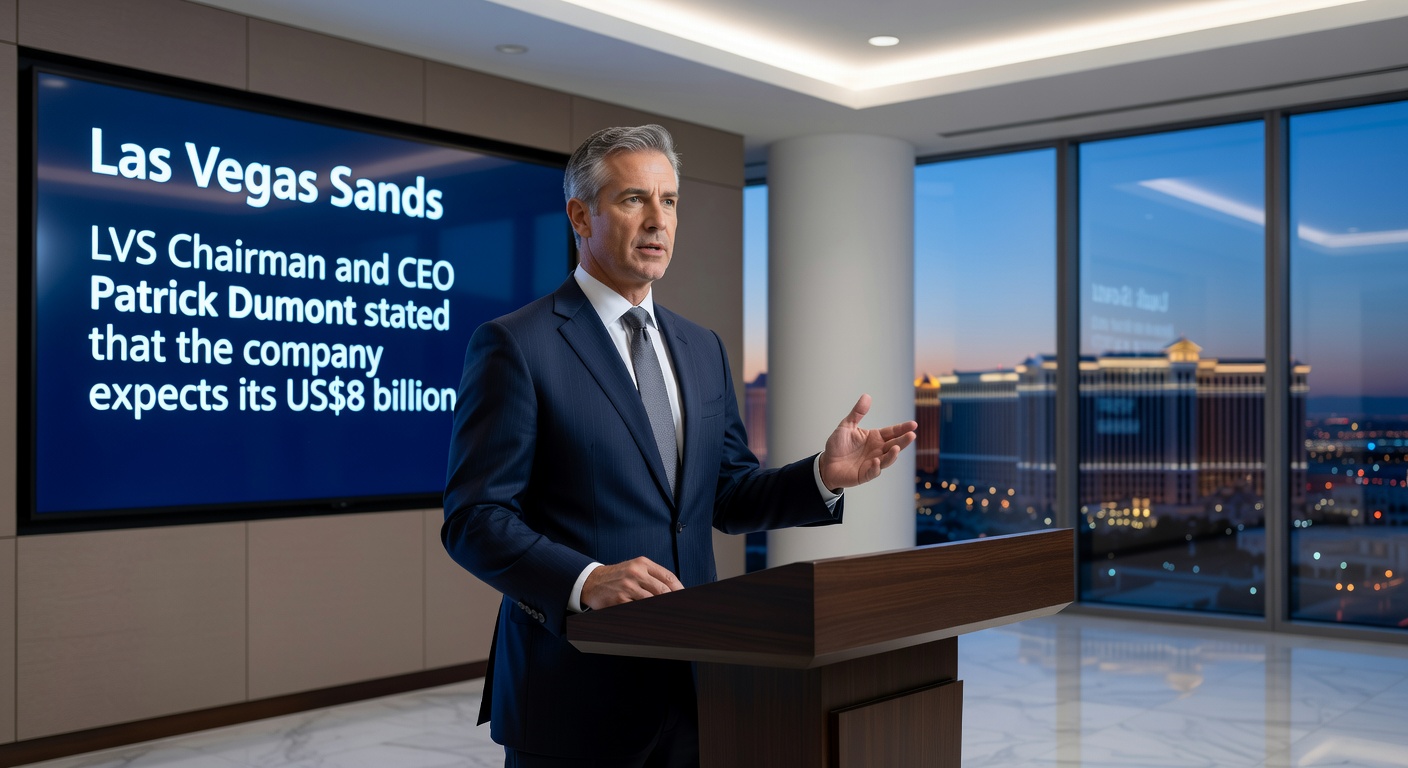
Las Vegas Sands has confirmed that its US$8 billion expansion of the Marina Bay Sands integrated resort in Singapore remains on schedule while meeting key financial benchmarks set by the company, and Chairman and CEO Patrick Dumont has stated that the initiative known as IR2 will exceed the firm’s return thresholds once completed. The development adds a luxury hotel tower along with expanded retail, dining, gaming, wellness amenities, meeting space, and a 15,000-seat arena designed to serve large-scale events and entertainment programming. Observers note that these elements combine to create additional capacity at an existing property that already draws significant visitor traffic from regional and international markets.
The project components address multiple segments of demand simultaneously, with the new tower increasing accommodation options, the arena providing a dedicated venue for concerts and sporting events, and the additional retail and dining space supporting extended guest stays. According to company statements, each of these features positions the resort to handle higher volumes without straining current infrastructure, and the overall design integrates with the existing Marina Bay Sands footprint to maintain operational continuity during construction phases.
Leadership Assessment of Financial Returns
Patrick Dumont has outlined that internal projections show the expansion surpassing established return thresholds, a metric the company uses to evaluate capital allocation across its portfolio. This assessment comes after detailed planning that incorporates construction timelines, expected revenue streams from gaming and non-gaming operations, and anticipated visitor growth in Singapore’s integrated resort sector. Those familiar with the firm’s approach indicate that such statements reflect rigorous modeling rather than speculation, as Las Vegas Sands applies consistent criteria when greenlighting large-scale investments.
The return threshold evaluation takes into account both direct contributions from new facilities and indirect benefits such as increased foot traffic across the entire property. Data from comparable expansions at other integrated resorts suggests that arena and wellness additions often generate diversified income that supports overall project economics, and Dumont’s comments align with this pattern by emphasizing multiple revenue channels working in tandem.
Construction Progress and Contract Details
Construction activities continue to advance following the award of a multi-billion-dollar contract to local developer Woh Hup Private Limited, a move that keeps the project on its established timeline. The selection of a Singapore-based contractor facilitates coordination with local regulatory requirements and supply chains, which in turn supports adherence to the schedule announced earlier in 2026. As of May 2026, site preparation and foundational work remain active, with subsequent phases expected to incorporate the new tower and arena structures in sequence.
Project managers have coordinated the sequencing so that existing resort operations experience minimal disruption, a consideration that preserves current revenue while new capacity comes online. The 15,000-seat arena stands out as a focal point because it introduces a purpose-built entertainment venue capable of hosting events that previously required off-site locations, and the addition of meeting space further expands options for corporate and convention bookings that complement the gaming and leisure offerings.
Market Demand and Positioning
Strong demand patterns in Singapore’s tourism and leisure sectors underpin the company’s decision to proceed with the full scope of IR2. Visitor arrivals and spending data released by regional tourism authorities indicate sustained interest in integrated resorts that combine accommodation, entertainment, and gaming under one roof, and Marina Bay Sands already ranks among the most visited properties in the city-state. The expansion therefore responds directly to these trends by increasing both the variety and volume of experiences available on site.
Industry reports from organizations such as the Singapore Tourism Board show consistent growth in meetings, incentives, conventions, and exhibitions activity, which aligns with the added meeting space and arena included in the project. At the same time, wellness amenities address evolving traveler preferences for health-focused offerings, while expanded retail and dining options cater to longer dwell times that boost per-visitor spending across categories.
Timeline and Next Milestones
The company expects phased openings to begin once core structural work concludes, although specific opening dates remain subject to final regulatory approvals and construction progress. As of May 2026, the project continues to track against the original multi-year schedule, with the contractor Woh Hup Private Limited managing day-to-day execution under oversight from Las Vegas Sands project teams. Subsequent milestones include completion of the arena roof structure and interior fit-out of the new hotel tower, both of which will determine when individual components become operational.
Coordination between the developer and Singapore authorities ensures that each stage complies with building codes and operational standards applicable to integrated resorts. This regulatory alignment reduces the risk of delays and supports the company’s stated goal of delivering the expansion within the planned timeframe while maintaining safety and quality benchmarks throughout the build process.
Conclusion
The IR2 expansion at Marina Bay Sands represents a significant capital commitment by Las Vegas Sands that directly addresses capacity constraints and demand growth in Singapore. With Patrick Dumont confirming that projected returns exceed internal thresholds, the project continues to move forward under contract with Woh Hup Private Limited and remains positioned to add hotel, arena, retail, dining, gaming, wellness, and meeting facilities to the existing resort. As construction advances through 2026, the development provides a clear example of how established operators scale integrated resort offerings in response to measured market signals.