Decoding the Interplay Between Real-Time Analytics and Customized Challenge Setups in Cross-Platform Wagering Systems
Katja Brooks · Jul 11, 2026

Decoding the Interplay Between Real-Time Analytics and Customized Challenge Setups in Cross-Platform Wagering Systems
Real-time analytics have become central to cross-platform wagering systems as operators track user interactions across desktop, mobile, and tablet interfaces simultaneously, processing vast streams of behavioral data to inform decisions. These systems collect metrics on bet timing, platform switches, and session durations while algorithms identify patterns that support the creation of tailored challenges designed to match individual player profiles. Observers note that such integration allows operators to respond dynamically rather than relying on static reward structures.
Core Components of Real-Time Analytics
Data pipelines in these environments ingest information from multiple sources including transaction logs, device sensors, and engagement histories, then apply machine learning models to generate insights within milliseconds. Researchers have documented how clustering techniques group users by activity levels, enabling systems to flag opportunities for challenge deployment at precise moments. Studies from academic institutions show that latency under 200 milliseconds improves response accuracy in live betting scenarios, and this capability extends across platforms where users frequently migrate mid-session.
According to industry reports released in July 2026, cross-platform data synchronization has grown by 34 percent year-over-year in regulated markets, driven by advances in cloud-based processing. These figures reveal that operators now maintain unified user profiles that persist regardless of device, which supports consistent challenge delivery while complying with regional data standards.
Mechanics of Customized Challenge Setups
Customized challenges typically involve time-bound tasks such as completing a sequence of bets on specific event types or achieving volume thresholds within defined windows. Systems generate these prompts by matching current user metrics against historical benchmarks, then adjust difficulty parameters to maintain engagement without exceeding responsible gaming thresholds. Those who have examined implementation logs find that challenge acceptance rates increase when prompts reference recent platform activity, such as a mobile session following a desktop login.
One documented approach uses reinforcement learning to refine challenge parameters after each cycle, drawing on completion data to calibrate future offerings. This process operates continuously, allowing setups to evolve alongside shifting user preferences across different jurisdictions.
Integration Dynamics Across Platforms
The interplay emerges when analytics engines feed directly into challenge generators, creating feedback loops where live data informs immediate adjustments. For instance, a sudden spike in mobile usage detected mid-evening can trigger a challenge optimized for shorter attention spans typical of handheld sessions. Data indicates these loops reduce churn by aligning task complexity with detected platform context.
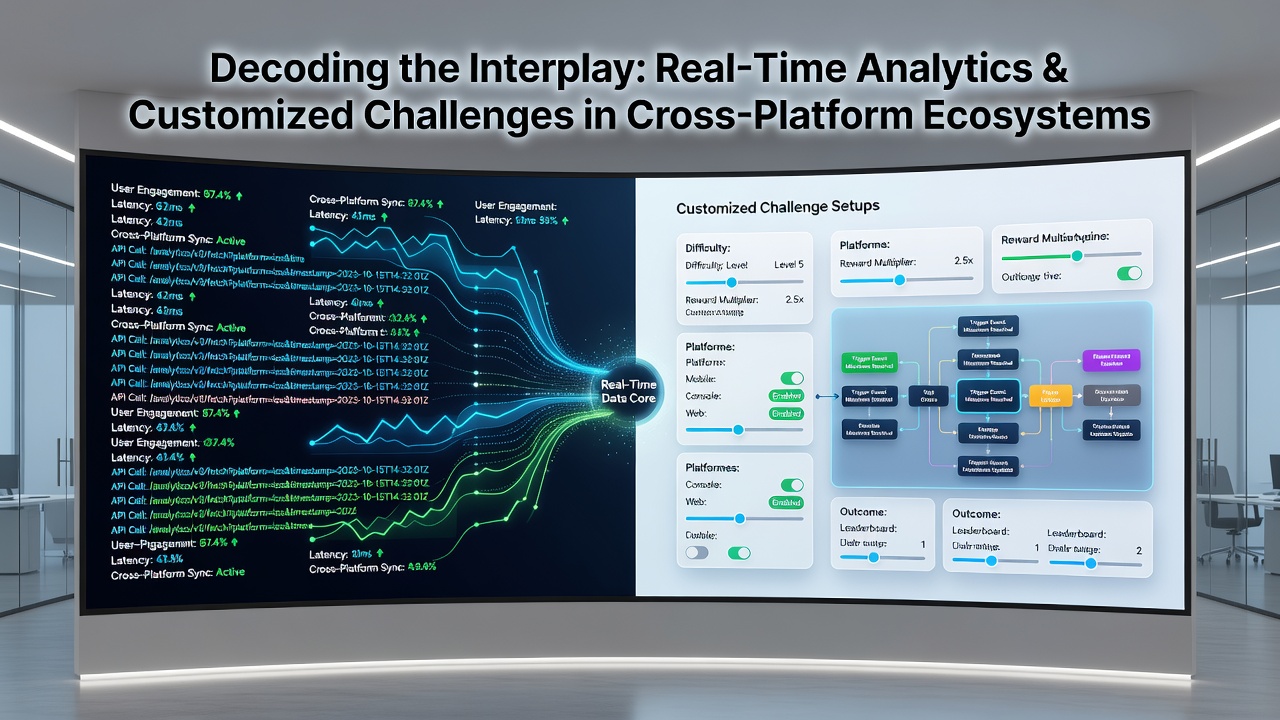
What's interesting is how synchronization protocols handle data handoffs between platforms, ensuring challenges remain relevant even when users switch devices. Experts have observed that seamless transitions depend on standardized APIs that preserve session state, which in turn supports more precise personalization. Australian regulatory filings from mid-2026 highlight that operators adopting these protocols report higher compliance rates during audits because challenge parameters stay within documented risk profiles.
Technical and Regulatory Considerations
Scalability demands increase as user bases expand across regions, requiring analytics infrastructure to handle concurrent streams without degradation. Canadian provincial oversight bodies have published guidelines emphasizing audit trails for challenge generation logic, which operators must maintain to demonstrate fairness. These requirements intersect with technical choices around data encryption and retention periods that vary by jurisdiction.
One case study from a European research consortium examined how latency variations between platforms affect challenge efficacy, finding that desktop-to-mobile handoffs benefit from predictive pre-loading of analytics models. This approach minimizes delays that could otherwise disrupt the intended user experience.
Future Trajectories in July 2026 and Beyond
Market analyses released during July 2026 point to continued investment in edge computing to bring analytics processing closer to end devices, potentially reducing reliance on centralized servers. Such developments could further tighten the connection between real-time data and challenge customization while addressing bandwidth constraints in emerging markets. Those monitoring regulatory shifts note that harmonization efforts across borders may standardize data-sharing practices, which would streamline cross-platform operations for multinational operators.
Conclusion
The relationship between real-time analytics and customized challenges continues to shape cross-platform wagering systems through iterative data application and adaptive task design. Evidence from multiple regions shows measurable impacts on user retention metrics and operational efficiency when these elements function in tandem. As infrastructure evolves, the mechanisms supporting this interplay are likely to incorporate additional variables such as environmental context and device capabilities.