Charting Engagement Rhythms That Connect Game Variety with Benefit Scaling in App-Driven Environments
Erik Washington · Jul 14, 2026
Charting Engagement Rhythms That Connect Game Variety with Benefit Scaling in App-Driven Environments
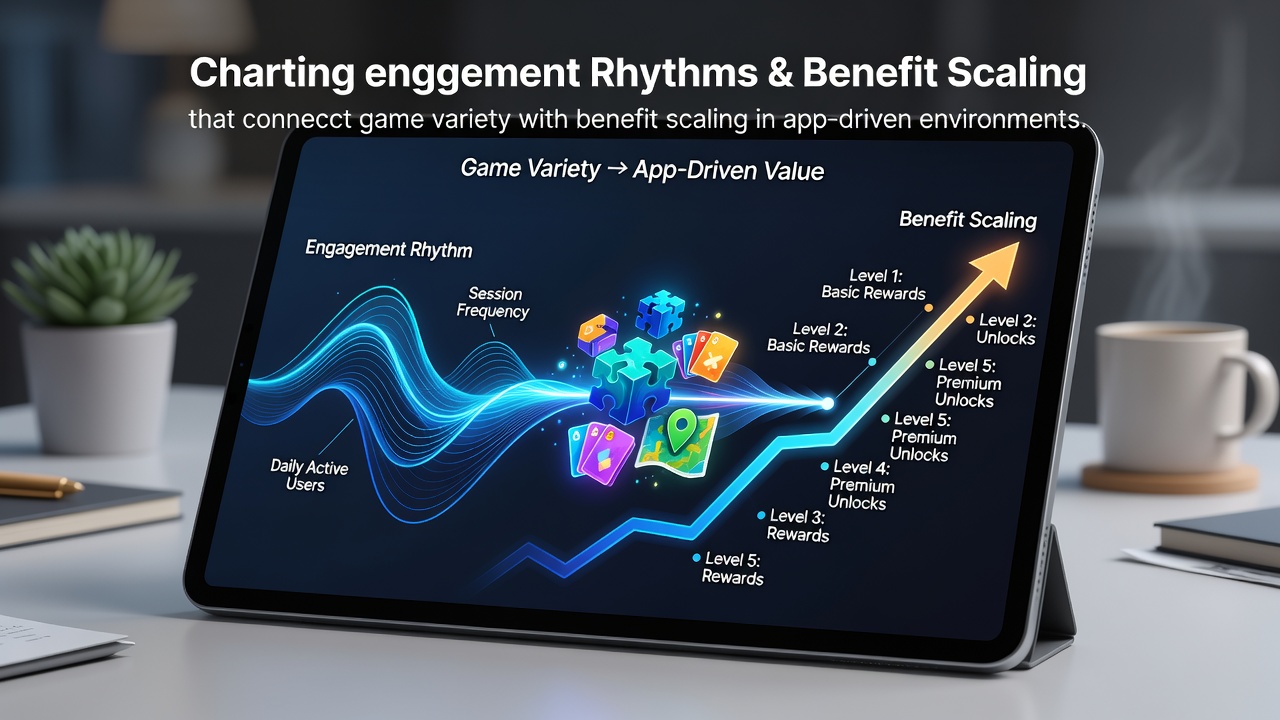
App developers track engagement rhythms through patterns of user interaction that tie diverse game options to graduated benefit systems in mobile platforms. These rhythms emerge when applications introduce multiple gameplay styles such as puzzle challenges, strategy modes, and social features while simultaneously advancing user rewards like experience points, virtual currency, and exclusive content unlocks. Data from app analytics platforms indicate that users who cycle through varied activities maintain longer session durations and higher return rates compared to those limited to single-mode experiences.
Patterns in User Interaction Cycles
Research from mobile analytics firms shows that engagement often follows predictable cycles where initial exploration of new game types leads to accelerated benefit accumulation. Users begin with basic tasks that introduce core mechanics then progress toward complex variants that demand skill development. This progression aligns with scaled rewards that unlock at milestones such as level completions or streak achievements. Observers note that applications incorporating seasonal events or rotating challenges sustain these cycles across extended periods by refreshing variety without disrupting established benefit pathways.
In July 2026 several major platforms released updated metrics revealing that hybrid game libraries combining casual and competitive elements produced the strongest correlation between activity diversity and reward velocity. Systems that adjust difficulty dynamically based on participation history further amplify this connection by ensuring benefits remain attainable yet meaningful.
Mechanisms Linking Variety to Scaled Benefits
Benefit scaling operates through algorithmic models that monitor participation across game categories and adjust reward multipliers accordingly. When users engage with multiple genres within a single app environment the system registers cumulative activity and escalates perks such as bonus multipliers or access to premium tiers. This approach draws from behavioral data patterns documented in industry reports where diversified interaction predicts sustained retention over months rather than weeks.
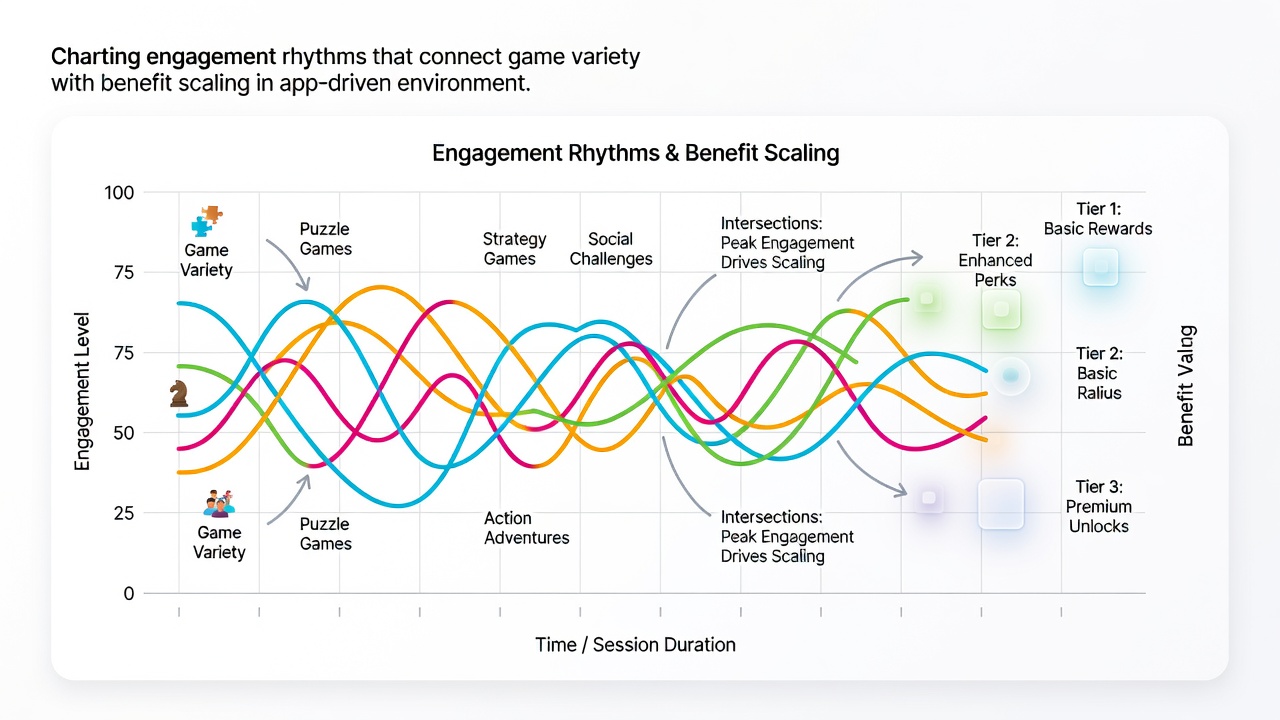
One documented case involves a fitness-oriented app that integrates mini-games focused on movement tracking, nutritional planning, and community challenges. Participants who alternate between these modes experience faster progression through reward ladders including custom workout plans and achievement badges. According to findings from Statistics Canada on digital engagement trends such multi-mode designs encourage repeated logins because each activity type contributes distinctly to overall benefit scaling.
Regional Data and Platform Comparisons
European mobile market studies compiled by the European Audiovisual Observatory highlight similar dynamics across productivity and entertainment applications. Users in regions with high smartphone penetration demonstrate stronger responses to variety-driven scaling where apps offer cross-genre integrations such as narrative adventures paired with resource management modules. These combinations generate engagement rhythms marked by short intense sessions interspersed with longer exploratory periods that accelerate tier advancement.
Australian digital economy reports from the Australian Communications and Media Authority further illustrate how localized content variations within apps influence benefit uptake. Applications that adapt game options to regional preferences while maintaining universal reward structures achieve higher completion rates for progressive milestones. The data indicate that seamless transitions between activity types prevent plateaus in user advancement by continuously feeding new inputs into the scaling engine.
Technical Implementation of Rhythmic Engagement
Backend systems employ real-time tracking to map individual rhythms and calibrate benefit delivery. Machine learning models analyze sequences of game selections against historical reward claims then predict optimal timing for introducing fresh variety elements. This predictive layer ensures that scaled benefits arrive in sync with user readiness rather than at arbitrary intervals which sustains momentum across diverse playstyles.
Developers also integrate feedback loops where community-driven content additions expand game variety and trigger corresponding adjustments in benefit tiers. Such updates maintain relevance in fast-evolving app ecosystems while preserving the core connection between participation breadth and reward depth.
Conclusion
Engagement rhythms in app-driven environments continue to evolve as platforms refine the interplay between game variety and benefit scaling. Current metrics from July 2026 and earlier periods demonstrate consistent patterns across multiple regions where diversified activities accelerate user progression through reward structures. These systems rely on precise data mapping and adaptive algorithms to maintain alignment between user choices and escalating advantages. Continued observation of these dynamics will inform future iterations of mobile applications seeking to optimize long-term participation through structured yet flexible engagement pathways.