Analyzing Synchronization Patterns Between Live Interaction Timelines and Accumulative Reward Thresholds Across Multi-Provider Digital Platforms
Viktor Jung · Jul 16, 2026
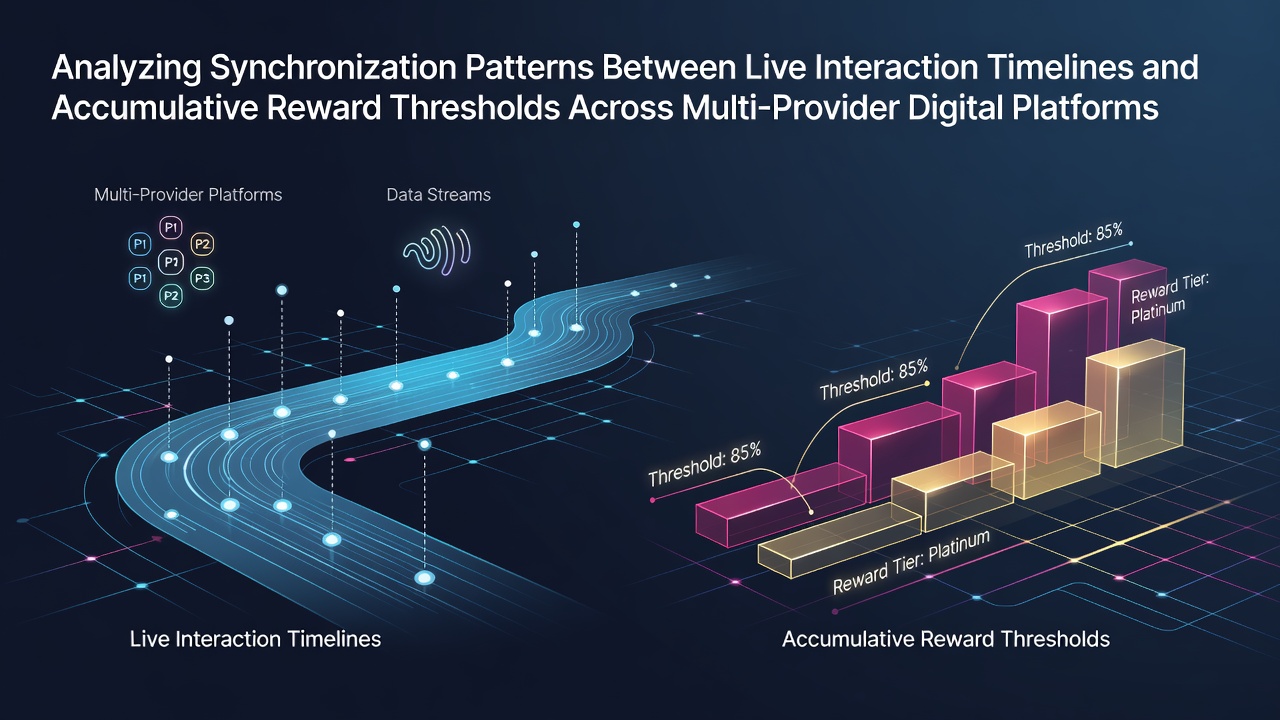
Analyzing Synchronization Patterns Between Live Interaction Timelines and Accumulative Reward Thresholds Across Multi-Provider Digital Platforms
Mapping Live Interaction Timelines in Multi-Provider Environments
Digital platforms from various providers collect continuous streams of user activity data that form detailed timelines of engagement events, and researchers examine how these sequences align with reward accumulation mechanisms that trigger at specific thresholds. Data from cloud-based services shows interaction logs capture actions such as content access, feature usage, and session durations while reward systems increment points or credits based on cumulative metrics that reach defined levels during ongoing operations. Analysts at institutions like the National Institute of Standards and Technology have documented patterns where timeline granularity affects the precision of threshold detection across integrated provider networks, and synchronization occurs when real-time feeds from one service feed directly into reward calculations managed by another. In July 2026 reports highlighted expanded API standards that facilitate smoother data handoffs between providers, reducing latency in how interaction events translate into threshold progress updates.
Defining Accumulative Reward Thresholds and Their Operational Mechanics
Reward thresholds operate as predefined benchmarks within loyalty or engagement programs where accumulated values from multiple interaction types unlock benefits, and multi-provider setups require careful coordination to ensure credits from one platform contribute accurately to totals managed elsewhere. Studies from the University of Melbourne indicate that threshold structures often incorporate time-weighted components, meaning recent interactions carry higher influence on accumulation rates than older ones, which creates dynamic synchronization demands as timelines advance. Providers implement these through shared databases or event-driven architectures that update reward ledgers whenever interaction milestones occur, and patterns emerge when certain timeline clusters, such as bursts of activity within short windows, accelerate progress toward thresholds more effectively than steady distributions. Observers note that cross-provider compatibility issues can disrupt these flows, leading to delayed recognitions of achieved thresholds until reconciliation processes complete.
Methods for Detecting Synchronization Patterns
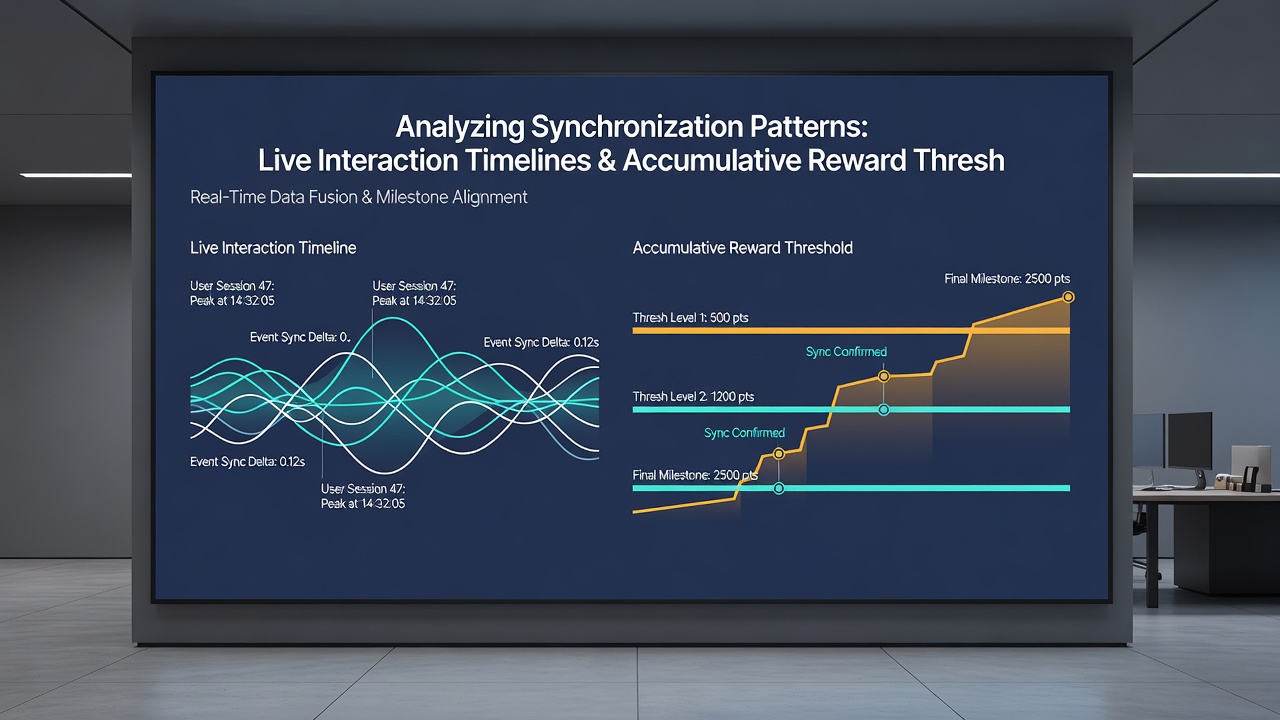
Statistical tools including correlation analysis and time-series alignment algorithms help identify how closely live interaction sequences match the pace of reward accumulation across platform boundaries, and machine learning models trained on historical datasets reveal recurring motifs where specific timeline shapes predict threshold crossings with measurable accuracy. Researchers apply Fourier transforms to decompose interaction timelines into frequency components that correspond to reward increment patterns, revealing periodic alignments that occur during peak usage periods across providers. Data from the European Commission's digital services monitoring program demonstrates that synchronization improves when providers adopt standardized event timestamps, allowing direct comparison of interaction events with reward state changes without manual adjustments. Patterns become evident in visualizations that overlay normalized timelines against reward curves, highlighting points of divergence or convergence that inform system optimizations.
Cross-Platform Case Examples and Observed Alignments
One documented scenario involves streaming services integrated with productivity applications where user viewing sessions generate interaction data that feeds into a unified reward ecosystem managed by a third-party loyalty provider, and synchronization succeeds when session end times coincide precisely with reward credit postings. Another example from enterprise software suites shows collaborative editing activities logged across multiple vendors contributing to tiered access rewards, with thresholds reached faster during synchronized high-activity intervals spanning several hours. Figures reveal that platforms using event sourcing architectures achieve tighter coupling between timelines and rewards compared to those relying on batch processing, as immediate propagation of interaction events prevents accumulation lags. Those who have examined these systems observe that geographic distribution of providers can introduce variable delays, yet standardized protocols mitigate such effects during extended operational periods.
Technical Challenges in Maintaining Pattern Consistency
Network variability and differing data schemas between providers create obstacles to perfect synchronization, where interaction timelines may advance while reward thresholds remain static until data merges occur, and solutions involve middleware layers that normalize timestamps and event formats in real time. Research indicates that error rates in threshold detection rise when interaction volumes spike beyond expected capacities, prompting providers to implement buffering mechanisms that preserve timeline integrity during overloads. In multi-provider digital environments the challenge extends to ensuring privacy-compliant data sharing, as synchronization requires visibility into interaction details without exposing sensitive user information across boundaries. July 2026 updates to interoperability guidelines addressed several of these issues by promoting encrypted event streams that maintain synchronization fidelity while adhering to regional data protection requirements.
Future Directions for Enhanced Synchronization Analysis
Emerging techniques focus on predictive modeling that anticipates threshold achievements based on partial timeline data, allowing proactive adjustments by providers before full accumulation completes, and integration with edge computing resources promises to reduce processing delays in live environments. Continued examination of these patterns supports development of more resilient digital ecosystems where rewards reflect interaction realities across provider networks without artificial gaps. Evidence from ongoing academic collaborations suggests that deeper analysis of synchronization metrics can guide infrastructure investments that strengthen overall system responsiveness.
Conclusion
Analysis of synchronization patterns between live interaction timelines and accumulative reward thresholds reveals intricate dependencies that shape performance across multi-provider digital platforms, and ongoing advancements in standards and tools continue to refine how these elements align in operational settings. Data from regulatory and research bodies underscores the value of precise coordination in delivering consistent user experiences through threshold-based systems.